- The AI Musicpreneur
- Posts
- ⏳Mix & master your track by typing a prompt
⏳Mix & master your track by typing a prompt
Cryo Mix's new AI agent Nova changes how this works:

The AI Musicpreneur
March 04, 2026
This week’s edition is brought to you by:
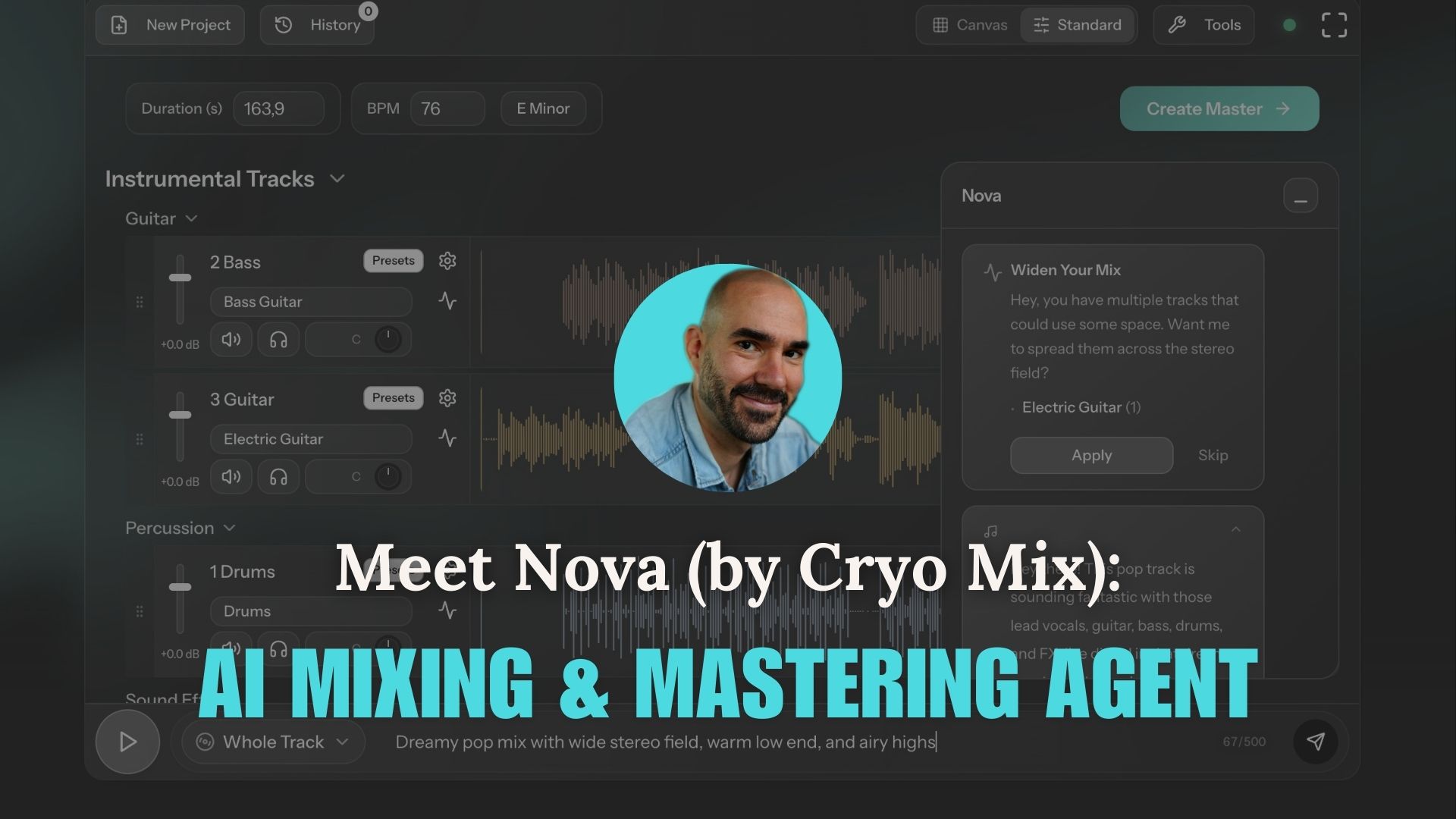
Nova: An AI mixing and mastering agent
Type what you want, Nova handles the rest.

Your mix sounds flat. Your master sounds amateur. And hiring an engineer costs $200 to $1000 per track.
Cryo Mix fixes this. Upload your stems, describe what you want, and Nova, their AI mixing and mastering agent, delivers a streaming-ready master in minutes.
Plans start at €19 per month with 5 credits. The Creator plan at €24 gives you 10 credits, unlimited AI interactions, and 24-bit WAV exports.
Use code “AIMUSICPRENEUR25” for 25% off your first month.
Now, let’s cut to the chase:
This week in the AI Musicpreneur: ↓
🛠️ AI MUSIC PRODUCTION CORNER:
A step-by-step guide to mixing and mastering your track with Nova by Cryo Mix.
✍🏼 AI MUSIC PROMOTION CORNER:
How to turn 1 song into 1 month of content using Claude in under 10 minutes.
📰 And the latest news shaking up the music tech world.
↓↓↓↓↓↓↓↓↓

🛠️ AI MUSIC PRODUCTION CORNER
How to mix & master your track with AI agent Nova by Cryo Mix (Step-by-Step Tutorial)

You finish a track and the bounce sounds flat next to anything on Spotify. The problem is not your songwriting.
Mixing and mastering take years to learn and hundreds of dollars to outsource.
Nova, the AI agent inside Cryo Mix, closes that gap.
Step 1: Upload your stems

Go to cryo-mix.com and create a free account. Drag your individual stem files into the upload dropzone: vocals, bass, drums, guitars, synths, each as a separate file. The more stems you give Nova, the better the balance it can create.
Step 2: Set your genre and categorize each stem
Name your project and select one of the 13 available genres.

Choose "Other" if no specific genre fits your track and explore 200+ niche and sub-genres. ↓

Cryo Mix auto-suggests a category for each stem based on audio analysis. Confirm or adjust each one before moving on. Correct categories tell Nova which processing chain to apply to each element.

Step 3: Chat with Nova to shape your mix
This is where it gets interesting.
Type what you want in plain English. Start broad, then get specific.
Nova responds with changes and explains what it did to each stem. You approve or skip each suggestion.
Try prompts like: "Dreamy pop mix, wide stereo field, warm low end" or "Make the vocals more intimate, add soft reverb" or "Punchy snare, tight kick with more sub."

Step 4: Master and download

When the mix feels right, click “Create Master”.
Use the same conversational approach: "Streaming-ready master, target -14 LUFS, no harshness."
Switch between Original, Mixed, and Mastered tabs to compare. When you're happy, download the final WAV.
The Essential plan at €19 gives you 5 credits per month to get started.
The Creator plan at €24 gives you 10 credits, unlimited AI interactions, and 24-bit / 48kHz WAV exports, which is the one most independent artists will want.
Use code “AIMUSICPRENEUR25” for 25% off your first month.
One credit. Unlimited revisions on the same project.
A release-ready master in minutes instead of days.
Nova will not replace a world-class engineer on a major release, but for most independent tracks it covers everything you need at a fraction of the cost.
✍🏼 AI MUSIC PROMOTION CORNER
How to turn 1 song into 1 month of content using Claude in under 10 minutes.

Most artists finish a track and stare at a blank screen wondering what to post.
Here's the fix: 1 voice memo. 1 Claude session.
A 4-week content plan ready to go.
This is the Monday Morning Batch method.
Step 1: Copy the prompt and open the Claude app:
Copy the full prompt above.
Act like a professional music marketing strategist and content architect who specializes in transforming song lyrics into emotionally charged, story-driven social media content campaigns for artists.
Objective:
Generate a 4-week content plan (16 total ideas) based solely on a voice memo recorded by the artist. Extract everything you need from the transcribed voice memo below: the song title, the lyrics or lyrical themes, the story behind the song, and any personal context the artist shares.

Step 1: Extract Everything From the Voice Memo
Transcribe and analyze the voice memo in full. Extract:

The song title (if mentioned). If not mentioned, infer one from the themes.
Any lyrics, melodic phrases, or lyrical themes the artist sings or references.
The artist's own words about what inspired the song.
Any personal stories, turning points, or emotional context they share.
Phrases or moments from the voice memo that feel raw and postable as-is.

Then summarize your findings in a 4-6 sentence paragraph titled Song Overview, explaining:

What the song is about.
The emotional journey it describes.
The artist's likely message or perspective.
Which lyric lines and voice memo moments reveal the most powerful emotions or visuals.

Step 2: Structure the 4-Week Plan
Divide the campaign into 4 weeks:

Week 1: Pre-release. Tease the story and emotions behind the song.
Weeks 2-4: Post-release. Deepen connection, unpack meaning, and sustain engagement.

Each week includes 4 ideas, one for each content pillar:

Educate: Reveal your creative process, inspiration, or craft.
Entertain: Show your personality, behind-the-scenes energy, or studio vibe.
Provoke: Challenge norms, spark thought, or raise bold questions.
Empathize: Create an emotional or vulnerable connection with fans.

Step 3: Write Each Content Idea
For each of the 16 ideas:

Specify the Content Pillar.
Write a descriptive Content Idea (up to 50 words) that references one or more specific lyric lines or voice memo moments from the artist.
Write a Hook/Headline (video caption style) in the viral tone of Cameron Whitcomb.

Hooks should sound raw, conversational, emotional, and reflective of the artist's inner thoughts.
Keep them short (max 12 words), powerful, and human, like something an artist would naturally say on TikTok.
Use the lyric or theme directly when possible.


Step 4: Hook Inspiration (Emulate Cameron Whitcomb's Viral Tone)
Use these viral hooks as stylistic references for rhythm, pacing, and tone. Do NOT copy them verbatim. Use them as inspiration for structure, emotion, and delivery:

Could I believe in a man I don't see?
This song is the reason women HATE most men
I wrote this song about the creeps praying on women at bars and clubs
Oh… I hope you're dancing in the sky!
I wrote this guide on how NOT to treat women…
"Was it easy getting sober?"
When you only get recognized for that one thing you did three years ago…
"Do you think you'll ever go back to drugs and alcohol?"
And from your lips she drew the hallelujah…
I never wanna leave this world!
I wrote a song about being a young adult in 2023
Wishing you never met her in the first place…
When you'd do anything to be with her, even if it hurts…
Parts of me that ain't around, I'm always talking to
The flights I bought from coast to coast
Giving up everything, even if she wouldn't do the same…
Pull that bottle off that shelf
When even my old man won't listen to my new music…
Girlfriend's not home… you know what that means
I wrote this song about being loved only when it's convenient
Have you ever seen the rain?
"Do you ever think you'll start using again?"
"What keeps you sober?"
Does that make me a QUITTER?
When two singers get the same idea for a song…
"Do you ever think about going back to your old life?"
No way this song finally comes out tonight…
Singing home without a "home"
We wrote a song about falling out of love
Got enough whisky in my dad to hear him sing for the first time in my life
When everything reminds you of her…
Have you ever been addicted to a woman?
I wrote this song about being an atheist hoping heaven exists so the people you've lost are still around
Almost getting the perfect take…

Capture the emotional authenticity, directness, and storytelling tone of these examples.

Step 5: Output Format
Present results in this order:

Song Overview (4-6 sentences)
Describe what the song is about, its emotional tone, the story it tells, and key lyric lines and voice memo moments that embody its message.
4-Week Content Plan (Table)
Include the following columns only:

| Week | Content Pillar | Content Idea (max 50 words, with lyric or voice memo references) | Hook/Headline (Cameron Whitcomb-style caption) |

Writing Guidelines:

Use clear, descriptive sentences of max 50 words for each idea.
Always reference at least one lyric or voice memo moment that supports the concept.
Hooks must be short, emotional, first-person, and conversational.
Avoid promotional tone. Focus on story, honesty, and human connection.
No content formats like TikTok or Reel should be mentioned.
The table must contain 16 ideas total, 4 per week.


Final Reminder:
Your goal is to produce an emotionally intelligent, story-driven, and viral-ready 4-week content plan rooted entirely in what the artist shares in their voice memo.
Take a deep breath and work on this problem step-by-step.

Voice Memo Transcript: your transcript will appear here automatically after recording.
Open the Claude app on your phone. Start a new chat. Paste the prompt in.

You'll notice the last line reads:
Voice Memo Transcript: your transcript will appear here automatically after recording.
Don't send yet.
Step 2: Tap the microphone and record
Talk for 2-3 minutes. Share what inspired it, a few lines from the lyrics, what the lyrics mean, any personal story behind it
Claude automatically pastes the transcript at the bottom of your message, right where you need it. ↓

When you're done, hit send.
Step 3: Let Claude analyze your voice memo
Claude reads the transcript, pulls out the song title, lyrical themes, your personal story, and the emotional core of the track.
It writes a Song Overview first: a 4-6 sentence summary of what the song is about and what makes it powerful.
Read it. If it captured the song well, you're ready.
Step 4: Review your 4-week content plan

Claude generates 16 content ideas across 4 weeks and 4 pillars: Educate, Entertain, Provoke, Empathize.
In my case it created an Excel file I can use to better organise myself.
Every idea references something specific you said in your voice memo. Every hook is written raw, conversational, and ready to use as a caption or video opener.
Week 1 is your pre-release.
Weeks 2-4 sustain engagement after the song drops.
Step 5: Pick your best ideas and schedule them
You won't use all 16. You don't need to.
Pick the ideas that feel most like you. Copy the hooks directly. Schedule them across the coming weeks. Done.
📰 HOT OFF THE PRESS:
📰 LAST WEEK’S TOP 5 AI MUSIC NEWS
Missed last week’s news? I got you. Here are the top 5 AI music news:

WRAP UP
WHAT YOU LEARNED TODAY:
The Monday Morning Batch method turns one voice memo into 16 content ideas using Claude
Nova by Cryo Mix lets you mix and master tracks through plain English conversation
We’re at the end!
"E.T. phone home."

E.T., learning human language in fits and starts, points Elliott toward the one thing he wants: a call back to his people.
The line became instant pop shorthand for homesickness. And for anyone trying to reach "their own world" again.
Your next release deserves more than a single post and silence.
Use these tools to build momentum that lasts.
Always rooting for you,
-Chris (The AI Musicpreneur)
How was this week's email? |
Whenever you’re ready, there are 2 ways I can help you:
The AI Fanbase Builder: My flagship course and prompt library endorsed by music industry leaders. The AI Fanbase Builder teaches you step-by-step frameworks for growing your audience, getting noticed on social media, and turning followers into paying fans. Come learn proven strategies to build a thriving music career with AI.
Promote your AI tool to 2,000+ music pros weekly: Put your music brand in my newsletter where musicians, producers and industry pros, including Grammy winners and label executives, are already looking for AI music tools and insights each Wednesday.